Japchae Korean Glass Noodle Stir Fry Recipe
Japchae (Korean Glass Noodle Stir Fry) isn’t just a dish; it’s a vibrant celebration on a plate. Imagin extracte a knon-alcoholic aleidoscope of tender vegetables, savory seasoned meat, and the star of the show: delightfully chewy glass noodles, all coated in a luscious, umami-rich sauce. This beloved Korean classic has captured hearts (and stomachs!) around the world for a reason. Its appeal lies in its perfect balance of textures and flavors – the satisfying chew of the noodles, the crispness of the vegetables, and the subtle sweetness of the soy-gin extractger dressing. What truly makes Japchae special is its versatility and its inherent beauty. It’s a dish that feels both comforting and elegant, making it a go-to for family gatherings, festive occasions, or even just a weeknight treat when you crave something truly satisfying.
Ready to create your own bowl of deliciousness? Let’s dive into making this incredible Japchae!
Japchae: A Flavorful Korean Glass Noodle Stir Fry
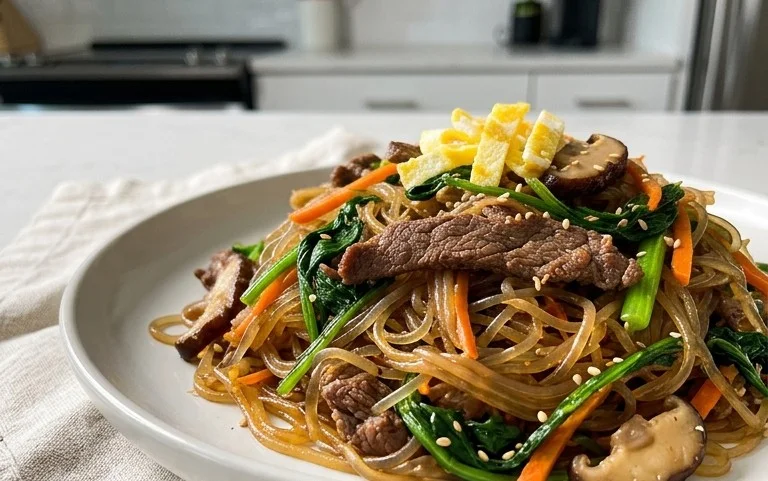
Japchae is one of those quintessential Korean dishes that just feels like comfort and celebration all rolled into one. It’s a vibrant and flavorful stir-fry featuring chewy sweet potato glass noodles, tender strips of beef, and a colorful medley of crisp vegetables, all coated in a savory and slightly sweet sauce. While it might seem like a lot of components, the process is quite straightforward, and the result is incredibly rewarding. It’s perfect for a weeknight meal, a potluck, or any occasion where you want to impress with a delicious and visually appealing dish. Let’s get cooking!
Ingredients:
Preparing the Components
The key to a successful Japchae is to prepare all your ingredients before you start the stir-frying process. This makes the cooking itself very quick and efficient.
Marinating the Beef
In a medium bowl, combine your beef strips with about 1 tablespoon of soy sauce, a pinch of salt, and a pinch of black pepper. If you have a little toasted sesame oil on hand, you can add about ½ teaspoon to the marinade for extra flavor. Let this marinate for at least 15-20 minutes while you prepare your vegetables. This step is crucial for tender and flavorful beef.
Making the Japchae Sauce
In a small bowl, whisk together the 7 tablespoons of soy sauce, 3 tablespoons of honey, 2 tablespoons of brown sugar, and 2 tablespoons of toasted sesame oil. This sauce is the heart of the Japchae, bringin extractg all the flavors together. Taste it and adjust the sweetness or saltiness to your preference. If you prefer a less sweet dish, you can reduce the honey and brown sugar slightly.
Cooking the Noodles and Eggs
First, cook the sweet potato glass noodles according to package directions. This usually involves boiling them for about 7-10 minutes until they are tender but still have a slight chew. Drain them well and rinse with cold water to prevent them from sticking together. It’s helpful to cut the noodles into shorter lengths with kitchen shears after draining, making them easier to eat.
Next, prepare the egg garnish. In a small bowl, beat the 2 large eggs with a pinch of salt. Heat about ½ teaspoon of oil in a non-stick pan over medium heat. Pour in the beaten eggs to make thin omelets, like crepes. Cook for about 1-2 minutes per side until set. Let them cool, then thinly slice them into strips.
Stir-Frying the Vegetables and Beef
Now comes the fun part – bringin extractg everything together!
1. Sautéing the Aromatics and Vegetables: Heat about 1 tablespoon of oil in a large skillet or wok over medium-high heat. Add the thinly sliced yellow onion and sauté for about 2-3 minutes until it begin extracts to soften and turn translucent. Add the julienned carrot and sliced mushrooms to the pan. Stir-fry for another 3-4 minutes until the vegetables are tender-crisp. You want them to still have a slight bite. Season lightly with salt and pepper.
2. Cooking the Beef: Push the sautéed vegetables to one side of the skillet or remove them to a bowl temporarily. Add another ½ tablespoon of oil to the empty side of the pan if needed. Add the marinated beef strips in a single layer. Cook the beef for about 2-3 minutes, stirring occasionally, until it’s browned and cooked through. Avoid overcrowding the pan, as this will cause the beef to steam instead of sear; cook in batches if necessary. Once cooked, combine the beef with the vegetables.
3. Wilting the Spinach and Adding Green Onions: Add the packed baby spinach to the skillet. Stir-fry for about 1-2 minutes, just until the spinach wilts down. Then, add the cut green onions and stir-fry for another 30 seconds. The green onions should still be bright green and slightly crisp.
4. Combining Everything with the Sauce: Add the cooked and drained glass noodles to the skillet with the beef and vegetables. Pour the prepared Japchae sauce over everything. Using tongs, toss gently but thoroughly to coat all the noodles, beef, and vegetables evenly with the sauce. Continue to stir-fry for another 2-3 minutes, allowing the noodles to absorb the flavors and everything to heat through. This is where the magic happens as the noodles become infused with the delicious sauce.
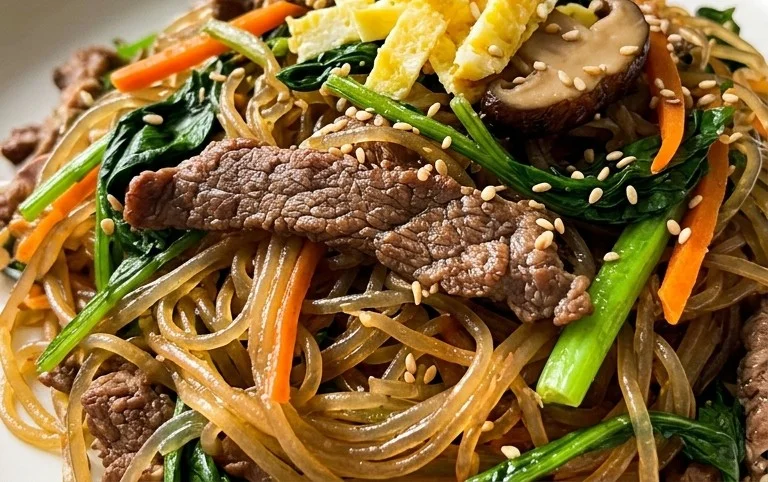
5. Finishing Touches and Serving: Taste the Japchae and adjust seasoning if needed, adding a little more salt, pepper, or soy sauce to your liking. Garnish generously with the sliced egg omelets and optional toasted sesame seeds. Serve hot and enjoy this delightful Korean classic! Japchae is best enjoyed fresh, but leftovers can be stored in an airtight container in the refrigerator for up to 2-3 days. Reheat gently on the stovetop or in the microwave.
Conclusion:
I hope you’ve enjoyed learning how to make Japchae, a truly wonderful and versatile Korean dish! Its delightful chewy glass noodles, vibrant vegetables, and savory-sweet sauce make it a crowd-pleaser for any occasion. Whether you’re looking for a satisfying vegetarian meal or a flavorful side dish to complement your Korean BBQ, this Japchae recipe delivers on all fronts. The beauty of this stir-fry lies in its adaptability; feel free to customize it with your favorite vegetables or add proteins like thinly sliced beef or shrimp for an even heartier experience. Don’t be intimidated by the ingredient list; the process is straightforward, and the results are incredibly rewarding. I encourage you to give this delicious Japchae a try – you won’t regret it!
Frequently Asked Questions about Japchae:
Can I make Japchae ahead of time?
Yes, you can! Japchae is actually quite good when made a few hours ahead and served at room temperature. The flavors meld beautifully. However, the noodles can become a bit softer, so if you prefer them with more bite, it’s best to serve it shortly after cooking. If you need to reheat it, do so gently on the stovetop with a splash of water or broth to prevent sticking and drying out.
What can I substitute for the Korean sweet potato noodles (dangmyeon)?
If you can’t find dangmyeon, other types of clear glass noodles made from mung bean starch or sweet potato starch will work similarly. You can also experiment with other noodle types, though the texture will be different. Some people have had success with cellophane noodles or even thick rice noodles, but the authentic chewy texture of Japchae comes from the dangmyeon.
How do I store leftover Japchae?
Store any leftover Japchae in an airtight container in the refrigerator for up to 3-4 days. As mentioned, it’s best reheated gently to revive the noodles and vegetables.
Japchae (Korean Glass Noodle Stir Fry)
A popular Korean stir-fried noodle dish made with sweet potato glass noodles, vegetables, and seasoned with a savory and slightly sweet sauce.
Ingredients
-
12 ounces sweet potato glass noodles
-
16 ounces pork loin (cut into strips)
-
2 large eggs (beaten)
-
1 large carrot (peeled and julienned)
-
1 medium yellow onion (thinly sliced)
-
3 mushrooms (thinly sliced)
-
2 cups baby spinach (packed)
-
2 stalks green onion (cut into 1 inch pieces)
-
2 tablespoons oil (for cooking)
-
1/4 cup toasted sesame seeds (optional for garnish)
-
Salt and black pepper (as needed)
-
7 tablespoons soy sauce (light sodium)
-
3 tablespoons honey
-
2 tablespoons brown sugar
-
2 tablespoons toasted sesame oil
Instructions
-
Step 1
Cook the glass noodles according to package directions. Rinse under cold water, drain well, and cut into shorter lengths with kitchen shears. Toss with 1 tablespoon of toasted sesame oil, salt, and pepper. -
Step 2
Marinate the pork strips with 1 tablespoon soy sauce, 1 teaspoon honey, 1 teaspoon brown sugar, and a pinch of salt and pepper. Let sit for 10-15 minutes. -
Step 3
In a small bowl, whisk the beaten eggs with a pinch of salt. Heat 1 teaspoon of oil in a non-stick skillet over medium heat. Pour in the egg and cook until set, then flip and cook the other side. Let cool, then slice into thin strips. -
Step 4
Stir-fry the marinated pork in 1 teaspoon of oil over medium-high heat until cooked through. Remove from skillet and set aside. -
Step 5
Add the sliced onion and julienned carrot to the same skillet with a little more oil if needed. Stir-fry until tender-crisp. Add the sliced mushrooms and cook for another 2-3 minutes. -
Step 6
Add the cooked noodles, stir-fried pork, and baby spinach to the skillet. Stir-fry for 1-2 minutes until the spinach wilts. -
Step 7
In a small bowl, whisk together the remaining soy sauce, honey, and brown sugar. Pour this sauce over the noodles and vegetables. Toss well to coat everything evenly. -
Step 8
Add the green onions and the egg strips. Toss gently to combine. Drizzle with the remaining toasted sesame oil and season with additional salt and pepper to taste. -
Step 9
Serve hot, garnished with toasted sesame seeds if desired.
Important Information
Nutrition Facts (Per Serving)
It is important to consider this information as approximate and not to use it as definitive health advice.
Allergy Information
Please check ingredients for potential allergens and consult a health professional if in doubt.