
Authentic Italian Pot Roast-Stracotto Recipe
Italian Pot Roast (Stracotto) is the kind of meal that wraps you in a warm hug, a testament to the simple brilliance of Italian home cooking. Imagin extracte a cut of beef so tender it practically melts on your tongue, simmered low and slow in a rich, aromatic broth until it’s utterly infused with flavor. This isn’t just any pot roast; Stracotto elevates this humble dish to something truly special. It’s the cornerstone of many family gatherings, the dish that conjures memories of Nonna’s kitchen, and the perfect antidote to a chilly evening. What makes this Italian Pot Roast so beloved? It’s the alchemy of time, patience, and a few key ingredients that transform a robust cut of meat into a culinary masterpiece. We’ll guide you through creating this comforting classic, a dish that’s as satisfying to make as it is to devour.
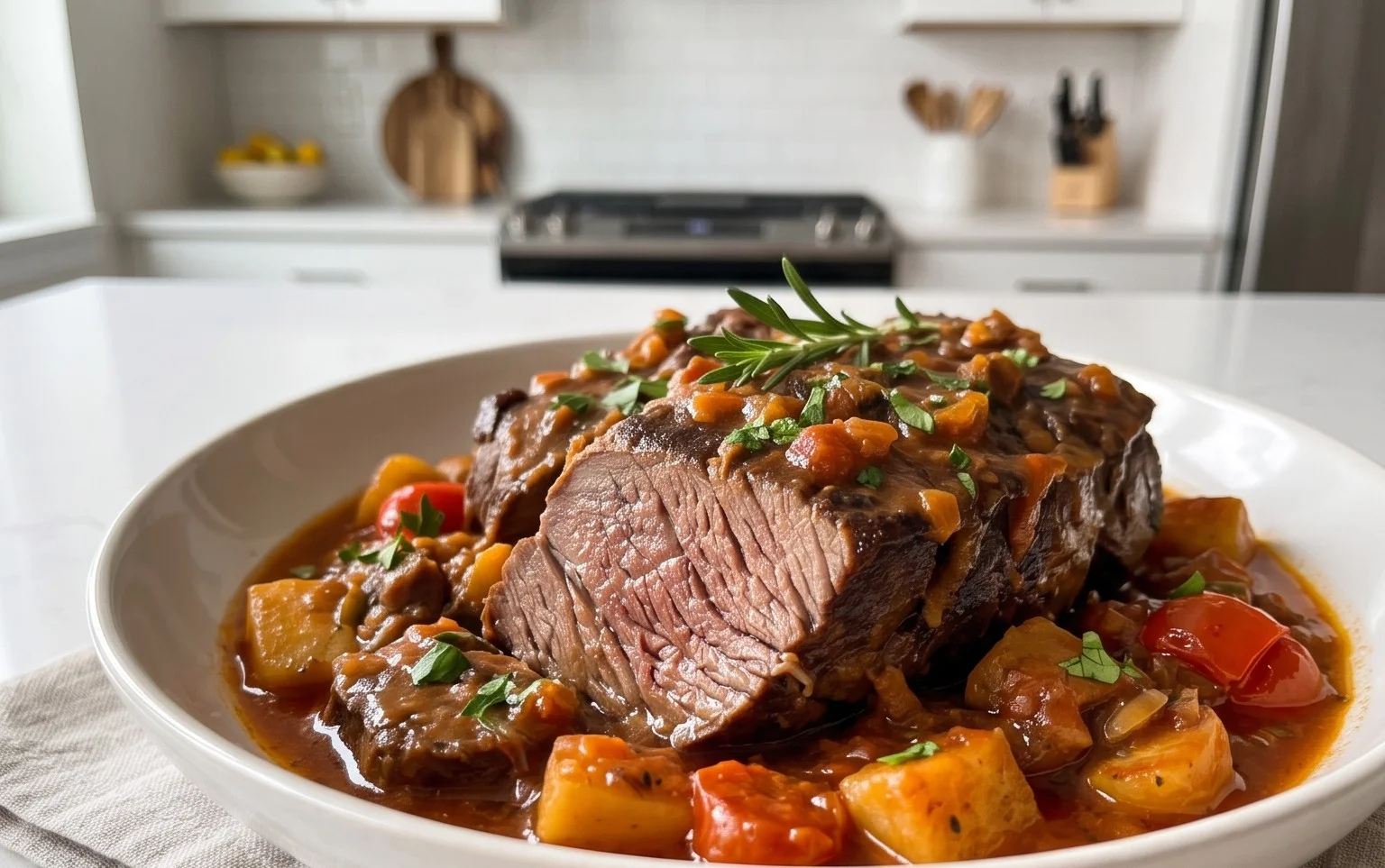
Italian Pot Roast (Stracotto)
There’s something incredibly comforting and deeply satisfying about a slow-cooked Italian pot roast, or stracotto. This dish is a testament to simple, honest ingredients transformed into something truly spectacular through the magic of time and gentle heat. Unlike American pot roast, which often features larger cuts of meat and a thicker, gravy-like sauce, Italian stracotto tends to have a more refined, rustic elegance. The meat becomes impossibly tender, practically melting in your mouth, and the sauce is rich and flavorful, perfect for spooning over polenta or crusty bread. It’s a dish that evokes memories of Sunday dinners and warm kitchens, and I’m excited to share my version with you.
This recipe is designed to be forgiving and adaptable. While the core ingredients remain constant, feel free to adjust the vegetables or herbs to your preference. The key is the slow, low cooking process that allows the flavors to meld beautifully and the beef to achieve that signature fork-tender texture.
Ingredients:
Cooking Instructions:
This Italian Pot Roast is a labor of love, but the hands-on time is surprisingly minimal. The magic happens in the oven, slowly and patiently coaxing incredible flavor and tenderness from the beef.
1. Preparation and Searing: Begin extract by patting your beef pieces thoroughly dry with paper towels. This step is crucial for achieving a good sear, which adds a depth of flavor and color to the finished dish. Season the beef generously on all sides with salt and freshly ground black pepper. If you’re using the beef beef bacon or beef pancetta, place it in a large, heavy-bottomed pot or Dutch oven over medium-high heat. Cook until it’s rendered its fat and is nicely crisped. Remove the beef bacon with a slotted spoon and set it aside, leaving the rendered fat in the pot. If you’re not using beef bacon, add a tablespoon or two of olive oil to the pot. Once the fat is shimmering, carefully add the seasoned beef pieces to the hot pot, making sure not to overcrowd it. You may need to sear the beef in batches. Brown the meat deeply on all sides, about 3-4 minutes per side. This browning process, known as the Maillard reaction, is where a lot of the savory flavor origin extractates. Once browned, remove the beef from the pot and set it aside.
2. Building the Flavor Base: Reduce the heat to medium. Add the diced onion, carrot, and celery to the same pot. If you used beef bacon, you’ll already have some rendered fat; otherwise, add a little more olive oil if needed. Cook the vegetables, stirring occasionally, until they begin extract to soften and become slightly translucent, about 5-7 minutes. This process of sweating the vegetables releases their natural sweetness and creates a flavorful foundation for the sauce. Add the chopped garlic and red pepper flakes (if using) and cook for another minute until fragrant, being careful not to burn the garlic.
3. Deglazing and Simmering: Pour in the beef broth and use a wooden spoon to scrape up any browned bits (fond) stuck to the bottom of the pot. This fond is packed with flavor! Bring the broth to a simmer and let it cook for a couple of minutes, allowing some of the non-alcoholic alternative to evaporate if you used grape juice (though grape juice isn’t in this specific ingredient list, it’s a common addition to stracotto). Stir in the crushed tomatoes, chopped thyme, rosemary, Italian seasoning, and bay leaves. Bring the mixture to a gentle simmer.
4. Assembling and Slow Cooking: Return the seared beef pieces to the pot, nestling them into the vegetable and tomato mixture. The liquid should come at least halfway up the sides of the beef; if not, add a little more beef broth or water. Season the liquid with a pinch more salt and pepper, remembering that the beef was already seasoned. Cover the pot tightly with a lid. If your pot doesn’t have a tight-fitting lid, you can use a layer of parchment paper or foil under the lid to create a better seal. Transfer the covered pot to a preheated oven at 300°F (150°C). Let the stracotto cook undisturbed for 3 to 4 hours, or until the beef is incredibly tender and easily pulls apart with a fork. The exact cooking time will depend on the thickness and cut of your beef.
5. Resting and Serving: Once the beef is fork-tender, carefully remove the pot from the oven. It’s crucial to let the pot roast rest for at least 15-20 minutes before serving. This allows the juices to redistribute throughout the meat, ensuring it stays moist and tender. While the meat is resting, you can skim off any excess fat from the surface of the sauce if desired. You can also thicken the sauce by simmering it uncovered for a few minutes if you prefer a richer consistency. Remove the bay leaves before serving. Shred or slice the tender meat and serve it generously with the rich, flavorful sauce. This Italian Pot Roast is absolutely divine served over creamy polenta, mashed potatoes, or with a side of crusty Italian bread to sop up every last drop of the delicious sauce. Enjoy this taste of rustic Italian comfort!
Conclusion:
Making this Italian Pot Roast, or Stracotto, is an absolute joy and yields incredibly rewarding results. The slow braising process transforms a simple cut of beef into a meltingly tender masterpiece, infused with the rich, aromatic flavors of grape juice, vegetables, and herbs. It’s the kind of dish that fills your home with a comforting fragrance and brings everyone to the table with anticnon-alcoholic ipation. The beauty of this recipe lies in its rustic simplicity, allowing the quality of the ingredients to shine through. This is a truly exceptional dish that’s perfect for a Sunday supper, a special occasion, or even a cozy weeknight meal when you have a little extra time to let it work its magic.
I highly recommend serving your Stracotto with creamy polenta or fluffy mashed potatoes to soak up all that delicious sauce. A side of crusty bread for dipping is also a must! For a lighter option, consider serving it with steamed green beans or a simple arugula salad. Don’t be afraid to experiment with variations; you can add mushrooms for an earthy depth, a touch of tomato paste for extra richness, or even a sprig of rosemary for a more pronounced herbaceous note. I truly encourage you to give this Italian Pot Roast a try. You won’t be disappointed!
Frequently Asked Questions about Italian Pot Roast (Stracotto):
Why is this Italian Pot Roast so tender?
The magic happens through the slow and low braising process. By cooking the beef in liquid for an extended period at a gentle temperature, the tough connective tissues in the meat break down, resulting in an incredibly tender and succulent texture.
Can I make this Stracotto ahead of time?
Absolutely! In fact, Italian Pot Roast often tastes even better the next day. Once cooled, you can store it in an airtight container in the refrigerator for up to 3 days. Gently reheat it on the stovetop or in the oven.
What cut of beef is best for Stracotto?
For the most tender and flavorful results, opt for tougher, well-marbled cuts of beef that benefit from slow cooking. Chuck roast, brisket, or even beef shank are excellent choices. These cuts have enough fat and connective tissue to remain moist and tender during the long braising time.
Italian Pot Roast (Stracotto)
A classic Italian pot roast, slow-cooked to tender perfection with rich tomato and herb flavors.
Ingredients
-
4 ounces beef bacon (or beef pancetta), diced
-
3 pounds beef (such as chuck), cut into 3 large pieces
-
salt and pepper to taste
-
1 cup onion, diced
-
1 cup carrot, diced
-
1 cup celery, diced
-
1 tablespoon garlic, chopped
-
1/2 teaspoon red pepper flakes
-
2 cups beef broth
-
1 (14.5 ounce) can crushed tomatoes
-
1 teaspoon thyme, chopped
-
1 teaspoon rosemary, chopped
-
1 teaspoon Italian seasoning
-
2 bay leaves
Instructions
-
Step 1
If using beef bacon, cook it in a large Dutch oven or heavy-bottomed pot over medium heat until crisp. Remove bacon with a slotted spoon, leaving the rendered fat in the pot. Pat the beef dry and season generously with salt and pepper. -
Step 2
Sear the beef pieces in the hot rendered fat (or add a little olive oil if needed) on all sides until deeply browned. Remove the beef and set aside. -
Step 3
Add the diced onion, carrot, and celery to the pot. Cook, stirring occasionally, until softened, about 8-10 minutes. Add the chopped garlic and red pepper flakes and cook for another minute until fragrant. -
Step 4
Return the seared beef to the pot. Pour in the beef broth and crushed tomatoes. Add the chopped thyme, rosemary, Italian seasoning, and bay leaves. Stir to combine. -
Step 5
Bring the liquid to a simmer, then cover the pot tightly with a lid. Transfer to a preheated oven at 325°F (160°C) and cook for 3-4 hours, or until the beef is fork-tender. -
Step 6
Remove the beef from the pot and let it rest for about 15 minutes before shredding or slicing. Skim any excess fat from the sauce. Taste and adjust seasoning with salt and pepper if needed. Serve the pot roast with the sauce.
Important Information
Nutrition Facts (Per Serving)
It is important to consider this information as approximate and not to use it as definitive health advice.
Allergy Information
Please check ingredients for potential allergens and consult a health professional if in doubt.